Buy jobcoach.eu ?
We are moving the project
jobcoach.eu .
Are you interested in purchasing the domain
jobcoach.eu ?
domain@kv-gmbh.de · 0541-91531010
Buy jobcoach.eu ?
What is the change of career direction?
A change of career direction refers to the decision to pursue a different career path than the one previously chosen. This could involve transitioning from one industry to another, pursuing a different role within the same industry, or even starting a completely new career altogether. This change may be driven by a variety of factors such as a desire for personal growth, a shift in interests, or the pursuit of better opportunities. It often involves acquiring new skills, networking, and adapting to a new work environment. **
How can I change my career direction at 25?
Changing your career direction at 25 is definitely possible and can be a great opportunity for personal and professional growth. Start by assessing your skills, interests, and values to determine what new career path you want to pursue. Research different industries and roles, and consider gaining new skills or education through courses, certifications, or further education. Network with professionals in your desired field, update your resume and cover letter to reflect your new direction, and be open to starting at an entry-level position to gain experience in your new career path. Remember that it's never too late to make a change and pursue a career that aligns with your passions and goals. **


Similar search terms for Direction
Top-Angebote
Products related to Direction:
-
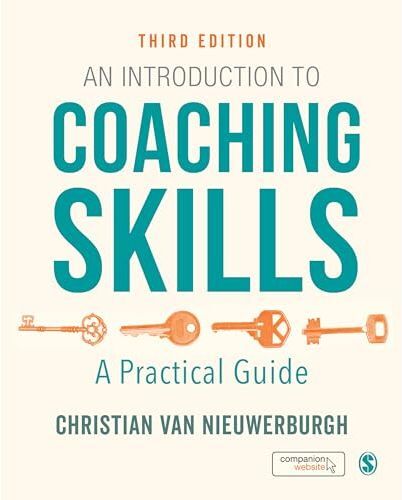
SAGE Publications An Introduction to Coaching Skills: A Practical GuideTo access the exclusive SAGE Videos, please see the code and instructions on the inside front cover of your textbook. If you have purchased the eBook from Amazon or another online retailer, please visit the book′s online resource site to contact SAGE, and we will assist further. This bestselling book introduces you step-by-step to the key skills needed to become a successful coach. Supported by an Online Resource site with over 70 videos of coaching in action, this practical book will be an invaluable resource for novices and trainee coaches.19,49 £*Shipping: 2,99 £Secure redirect to the provider
-
All Categories Goods Silent Direction Automatic Watch Winder Display Box And Storage Case Silent Direction Automatic Watch Winder Display Box And Storage CaseKeep your favorite timepiece ready, protected, and beautifully displayed every day. This automatic watch winder is designed for watch owners who want effortless movement maintenance without noisy distractions. Its 2direction rotation helps support...127,97 $*Shipping: 0,00 $Secure redirect to the provider
-
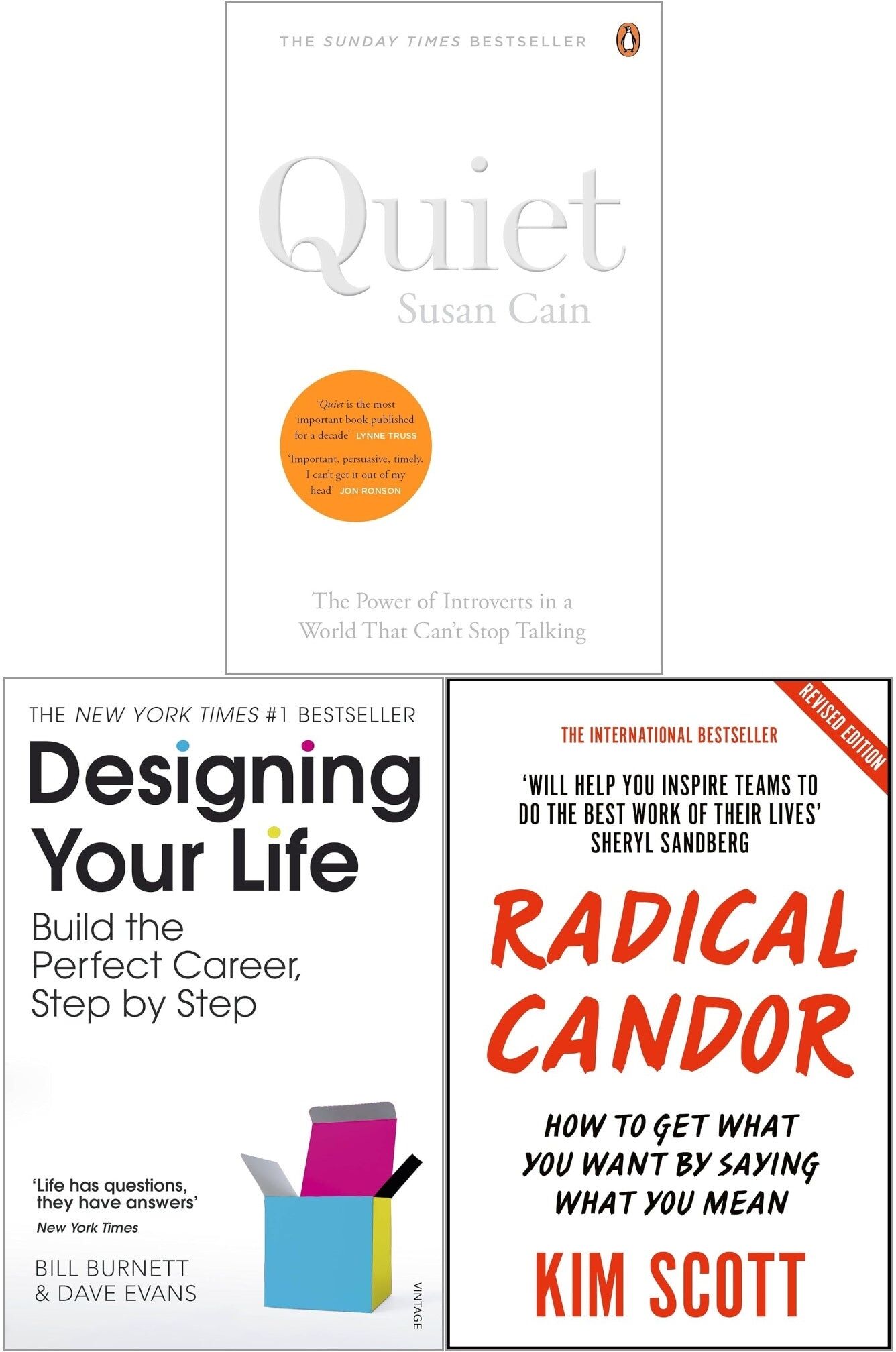
Penguin/Pan Macmillan Designing Your Life, Radical Candor and Quiet 3 Books Collection Set Personal Development, Leadership, Career Success & Self ImprovementDesigning Your Life, Radical Candor and Quiet 3 Books Collection Set Designing Your Life by Bill Burnett & Dave Evans Stanford innovators Bill Burnett and Dave Evans show us how design thinking can help us create a life that is both meaningful and fulfilling, regardless of who and where we are, our careers and our age. Designing Your Life puts forward the idea that the same design thinking responsible for amazing technology, products and spaces can be used to build towards a better life and career by a design of your own making. Radical Candor by Kim Scott Radical Candor by Kim Scott is a groundbreaking leadership and communication guide that teaches how to give feedback effectively, build trust, and create high-performing teams without becoming harsh—or avoiding difficult conversations. Based on Scott’s experience at Google, Apple and Silicon Valley startups, Radical Candor introduces a simple but powerful framework built on two pillars: Care Personally Challenge Directly The book provides practical tools for giving honest feedback, fostering open communication, strengthening working relationships, and becoming a more compassionate and impactful leader. Quiet by Susan Cain Quiet, the Sunday Times and New York Times Bestseller by Susan Cain, will permanently change how we see introverts - and how you see yourself. Our lives are driven by a fact most of us cant name and dont understand: whether were an introvert or an extrovert. This defines who our friends and lovers are, which careers we choose, and whether we blush when were embarrassed. At least a third of us are on the introverted side. Some of the worlds most talented people are introverts. Without them, we wouldnt have the Apple computer, the theory of relativity and Van Goghs sunflowers.16,99 £*Shipping: 2,99 £Secure redirect to the provider
-
Uplifted Goods Nordic Architectural Ceramic Dual Direction Luminary wooden LampshadeEnhance your interior landscape with the Nordic Architectural Ceramic Dual Direction Luminary. This professional grade lighting solution is meticulously engineered with a specialized high density ceramic frame designed to provide structural elegance...254,97 $*Shipping: 0,00 $Secure redirect to the provider

-
I need assistance and guidance in the right direction for my history assignment.
Sure, I'd be happy to help! What specific topic or aspect of history is your assignment focused on? Once I know that, I can provide you with some guidance and resources to help you get started. Whether you need help with research, understanding a particular event or concept, or structuring your assignment, I'm here to assist you in the right direction. Let me know how I can best support you with your history assignment! **
-
What is the difference between support and direction vectors?
Support vectors are the vectors that lie on the hyperplane and are used to define the decision boundary in a support vector machine (SVM) algorithm. They are the closest vectors to the hyperplane and play a crucial role in determining the optimal separation of classes. On the other hand, direction vectors are the vectors that indicate the direction of movement or change in a particular space. In the context of SVM, direction vectors are not directly related to the decision boundary but can be used to understand the movement of the data points in the feature space. **
-
Why is the direction vector a support vector and derivative?
The direction vector is a support vector because it provides the direction in which a function is changing. It is also a derivative because it represents the rate of change of the function in that direction. In other words, the direction vector gives us the slope of the function in a specific direction, making it both a support vector and a derivative. **
-
'In which direction?'
The direction can vary depending on the context of the question. It could refer to a physical direction such as north, south, east, or west, or it could be asking about a figurative direction such as progress, growth, or change. Clarifying the specific context of the question will help determine the appropriate response. **
'What fragrance direction?'
The fragrance direction refers to the overall concept and theme that guides the creation of a new fragrance. It includes the specific notes, ingredients, and overall mood that the perfumer aims to capture. The fragrance direction can be inspired by a variety of sources, such as nature, a specific location, a particular emotion, or a cultural trend. It serves as a roadmap for the perfumer to follow as they create a new scent, ensuring that it aligns with the intended vision and resonates with the target audience. **
What is the difference between a direction vector and a support vector?
A direction vector is a vector that indicates the direction in which a line or a plane is pointing. It does not have a specific starting point and can be scaled to represent different magnitudes of the same direction. On the other hand, a support vector is a vector that lies on the line or plane and is used to define its position in space. It has a specific starting point and represents a specific point on the line or plane. In other words, a direction vector gives the orientation of a line or plane, while a support vector gives a specific point on that line or plane. **
Top-Angebote
Products related to Direction:
-
Graco Simple Sway LX Multi-Direction Swing - TeddyThe Simple Sway LX with Multi-Direction features a multi-direction seat thatgives baby various viewpoints with options to face right, front or left. This seat design allows parents to change the motion from a side-to-side swing to a head-to-toe...159,99 $*Shipping: 0,00 $Secure redirect to the provider
-
Graco DuetConnect LX Swing with Multi-Direction - AsherDuetConnect LX with Multi-Direction is a 2-in-1 Swing and Portable Bouncer that allows you to always keep baby soothed and nearby. The cozy swing seat doubles as a portable bouncer with carry handles, giving you flexibility to use in any room in the...139,99 $*Shipping: 0,00 $Secure redirect to the provider
-
SAGE Publications An Introduction to Coaching Skills: A Practical GuideTo access the exclusive SAGE Videos, please see the code and instructions on the inside front cover of your textbook. If you have purchased the eBook from Amazon or another online retailer, please visit the book′s online resource site to contact SAGE, and we will assist further. This bestselling book introduces you step-by-step to the key skills needed to become a successful coach. Supported by an Online Resource site with over 70 videos of coaching in action, this practical book will be an invaluable resource for novices and trainee coaches.19,49 £*Shipping: 2,99 £Secure redirect to the provider
-
All Categories Goods Silent Direction Automatic Watch Winder Display Box And Storage Case Silent Direction Automatic Watch Winder Display Box And Storage CaseKeep your favorite timepiece ready, protected, and beautifully displayed every day. This automatic watch winder is designed for watch owners who want effortless movement maintenance without noisy distractions. Its 2direction rotation helps support...127,97 $*Shipping: 0,00 $Secure redirect to the provider
-
What is the change of career direction?
A change of career direction refers to the decision to pursue a different career path than the one previously chosen. This could involve transitioning from one industry to another, pursuing a different role within the same industry, or even starting a completely new career altogether. This change may be driven by a variety of factors such as a desire for personal growth, a shift in interests, or the pursuit of better opportunities. It often involves acquiring new skills, networking, and adapting to a new work environment. **
-
How can I change my career direction at 25?
Changing your career direction at 25 is definitely possible and can be a great opportunity for personal and professional growth. Start by assessing your skills, interests, and values to determine what new career path you want to pursue. Research different industries and roles, and consider gaining new skills or education through courses, certifications, or further education. Network with professionals in your desired field, update your resume and cover letter to reflect your new direction, and be open to starting at an entry-level position to gain experience in your new career path. Remember that it's never too late to make a change and pursue a career that aligns with your passions and goals. **
-
I need assistance and guidance in the right direction for my history assignment.
Sure, I'd be happy to help! What specific topic or aspect of history is your assignment focused on? Once I know that, I can provide you with some guidance and resources to help you get started. Whether you need help with research, understanding a particular event or concept, or structuring your assignment, I'm here to assist you in the right direction. Let me know how I can best support you with your history assignment! **
-
What is the difference between support and direction vectors?
Support vectors are the vectors that lie on the hyperplane and are used to define the decision boundary in a support vector machine (SVM) algorithm. They are the closest vectors to the hyperplane and play a crucial role in determining the optimal separation of classes. On the other hand, direction vectors are the vectors that indicate the direction of movement or change in a particular space. In the context of SVM, direction vectors are not directly related to the decision boundary but can be used to understand the movement of the data points in the feature space. **
Similar search terms for Direction
-
Penguin/Pan Macmillan Designing Your Life, Radical Candor and Quiet 3 Books Collection Set Personal Development, Leadership, Career Success & Self ImprovementDesigning Your Life, Radical Candor and Quiet 3 Books Collection Set Designing Your Life by Bill Burnett & Dave Evans Stanford innovators Bill Burnett and Dave Evans show us how design thinking can help us create a life that is both meaningful and fulfilling, regardless of who and where we are, our careers and our age. Designing Your Life puts forward the idea that the same design thinking responsible for amazing technology, products and spaces can be used to build towards a better life and career by a design of your own making. Radical Candor by Kim Scott Radical Candor by Kim Scott is a groundbreaking leadership and communication guide that teaches how to give feedback effectively, build trust, and create high-performing teams without becoming harsh—or avoiding difficult conversations. Based on Scott’s experience at Google, Apple and Silicon Valley startups, Radical Candor introduces a simple but powerful framework built on two pillars: Care Personally Challenge Directly The book provides practical tools for giving honest feedback, fostering open communication, strengthening working relationships, and becoming a more compassionate and impactful leader. Quiet by Susan Cain Quiet, the Sunday Times and New York Times Bestseller by Susan Cain, will permanently change how we see introverts - and how you see yourself. Our lives are driven by a fact most of us cant name and dont understand: whether were an introvert or an extrovert. This defines who our friends and lovers are, which careers we choose, and whether we blush when were embarrassed. At least a third of us are on the introverted side. Some of the worlds most talented people are introverts. Without them, we wouldnt have the Apple computer, the theory of relativity and Van Goghs sunflowers.16,99 £*Shipping: 2,99 £Secure redirect to the provider
-
Uplifted Goods Nordic Architectural Ceramic Dual Direction Luminary wooden LampshadeEnhance your interior landscape with the Nordic Architectural Ceramic Dual Direction Luminary. This professional grade lighting solution is meticulously engineered with a specialized high density ceramic frame designed to provide structural elegance...254,97 $*Shipping: 0,00 $Secure redirect to the provider
-
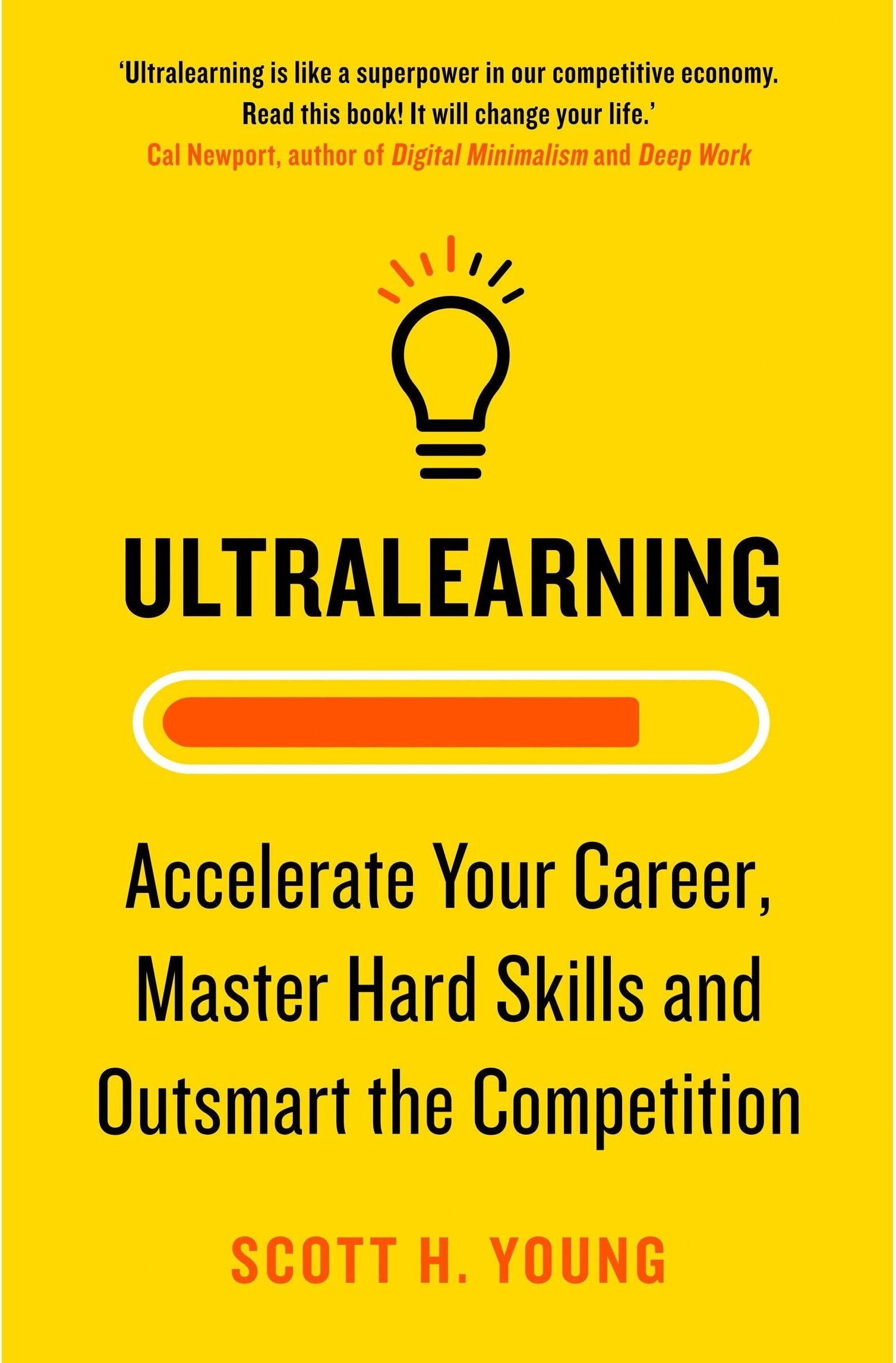
Thorsons Ultralearning: Accelerate Your Career, Master Hard Skills and Outsmart the CompetitionFuture-proof your career and maximize your competitive advantage by learning the skill necessary to stay relevant, reinvent yourself, and adapt to whatever the workplace throws your way in this essential guide. Faced with tumultuous economic times and rapid technological change, staying ahead in your career depends on continual learning―a lifelong mastery of new ideas, subjects, and skills. If you want to accomplish more and stand apart from everyone else, you need to become an ultralearner. Scott Young incorporates the latest research about the most effective learning methods and the stories of other ultralearners like himself―among them Ben Franklin, Judit Polgar, and Richard Feynman, as well as a host of others, such as little-known modern polymaths like Nigel Richards who won the World Championship of French Scrabble―without knowing French. Young documents the methods he and others have used and shows that, far from being an obscure skill limited to aggressive autodidacts, ultralearning is a powerful tool anyone can use to improve their career, studies, and life. Ultralearning explores this fascinating subculture, shares the nine principles behind every successful ultralearning project, and offers insights into how you can organize and execute a plan to learn anything deeply and quickly, without teachers or budget-busting tuition costs. Whether the goal is to be fluent in a language (or ten languages), earn the equivalent of a college degree in a fraction of the time, or master multiple skills to build a product or business from the ground up, the principles in Ultralearning will guide you to success.8,99 £*Shipping: 2,99 £Secure redirect to the provider
-
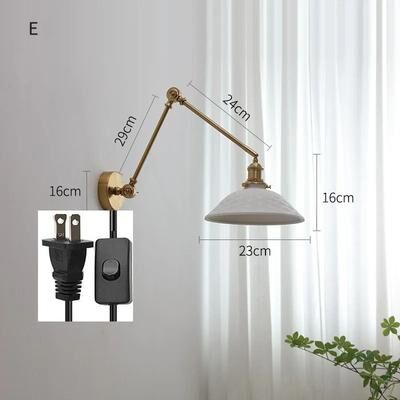
Uplifted Goods Nordic Architectural Ceramic Dual Direction Luminary plug Type DEnhance your interior landscape with the Nordic Architectural Ceramic Dual Direction Luminary. This professional grade lighting solution is meticulously engineered with a specialized high density ceramic frame designed to provide structural elegance...254,97 $*Shipping: 0,00 $Secure redirect to the provider
-
Why is the direction vector a support vector and derivative?
The direction vector is a support vector because it provides the direction in which a function is changing. It is also a derivative because it represents the rate of change of the function in that direction. In other words, the direction vector gives us the slope of the function in a specific direction, making it both a support vector and a derivative. **
-
'In which direction?'
The direction can vary depending on the context of the question. It could refer to a physical direction such as north, south, east, or west, or it could be asking about a figurative direction such as progress, growth, or change. Clarifying the specific context of the question will help determine the appropriate response. **
-
'What fragrance direction?'
The fragrance direction refers to the overall concept and theme that guides the creation of a new fragrance. It includes the specific notes, ingredients, and overall mood that the perfumer aims to capture. The fragrance direction can be inspired by a variety of sources, such as nature, a specific location, a particular emotion, or a cultural trend. It serves as a roadmap for the perfumer to follow as they create a new scent, ensuring that it aligns with the intended vision and resonates with the target audience. **
-
What is the difference between a direction vector and a support vector?
A direction vector is a vector that indicates the direction in which a line or a plane is pointing. It does not have a specific starting point and can be scaled to represent different magnitudes of the same direction. On the other hand, a support vector is a vector that lies on the line or plane and is used to define its position in space. It has a specific starting point and represents a specific point on the line or plane. In other words, a direction vector gives the orientation of a line or plane, while a support vector gives a specific point on that line or plane. **
* All prices are inclusive of VAT and, if applicable, plus shipping costs. The offer information is based on the details provided by the respective shop and is updated through automated processes. Real-time updates do not occur, so deviations can occur in individual cases. ** Note: Parts of this content were created by AI.