Buy jobcoach.eu ?
We are moving the project
jobcoach.eu .
Are you interested in purchasing the domain
jobcoach.eu ?
domain@kv-gmbh.de · 0541-91531010
Buy jobcoach.eu ?
What is the nucleus?
The nucleus is a membrane-bound organelle found in eukaryotic cells that contains the cell's genetic material, including DNA. It acts as the control center of the cell, regulating gene expression and coordinating cellular activities. The nucleus is essential for cell division, growth, and reproduction. It is surrounded by a double membrane called the nuclear envelope, which contains pores that allow for the exchange of molecules between the nucleus and the cytoplasm. **
What is an atomic nucleus?
An atomic nucleus is the central part of an atom that contains protons and neutrons. It is positively charged due to the presence of protons and is surrounded by a cloud of negatively charged electrons. The nucleus is extremely dense and makes up the majority of the atom's mass. The number of protons in the nucleus determines the element's identity, while the number of neutrons can vary, resulting in different isotopes of the same element. **
Similar search terms for Nucleus
Top-Angebote
Products related to Nucleus:
-
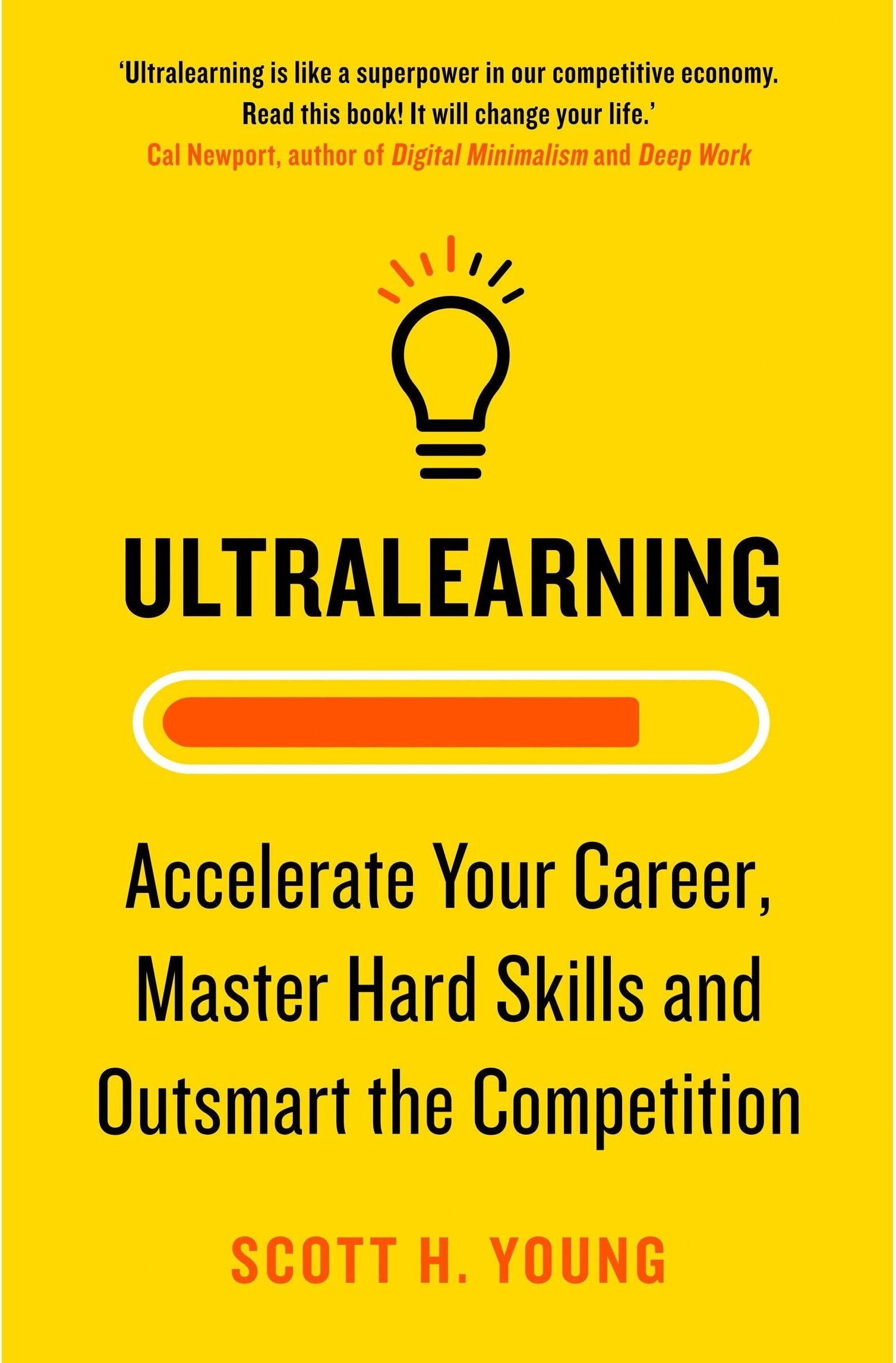
Thorsons Ultralearning: Accelerate Your Career, Master Hard Skills and Outsmart the CompetitionFuture-proof your career and maximize your competitive advantage by learning the skill necessary to stay relevant, reinvent yourself, and adapt to whatever the workplace throws your way in this essential guide. Faced with tumultuous economic times and rapid technological change, staying ahead in your career depends on continual learning―a lifelong mastery of new ideas, subjects, and skills. If you want to accomplish more and stand apart from everyone else, you need to become an ultralearner. Scott Young incorporates the latest research about the most effective learning methods and the stories of other ultralearners like himself―among them Ben Franklin, Judit Polgar, and Richard Feynman, as well as a host of others, such as little-known modern polymaths like Nigel Richards who won the World Championship of French Scrabble―without knowing French. Young documents the methods he and others have used and shows that, far from being an obscure skill limited to aggressive autodidacts, ultralearning is a powerful tool anyone can use to improve their career, studies, and life. Ultralearning explores this fascinating subculture, shares the nine principles behind every successful ultralearning project, and offers insights into how you can organize and execute a plan to learn anything deeply and quickly, without teachers or budget-busting tuition costs. Whether the goal is to be fluent in a language (or ten languages), earn the equivalent of a college degree in a fraction of the time, or master multiple skills to build a product or business from the ground up, the principles in Ultralearning will guide you to success.8,99 £*Shipping: 2,99 £Secure redirect to the provider
-
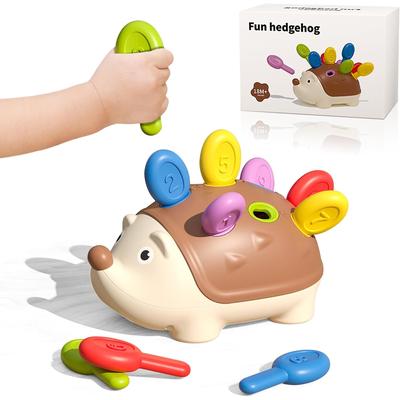
Tiny Tots Teens Trends Montessori Educational Toy, Hedgehog Fine Motor Skills, Toddler Counting, Sensory Development Montessori Educational Toy, Hedgehog Fine Motor Skills, Toddler Counting, Sensory DevelopmentHedgehog Montessori Educational Toy is a delightful and engaging learning tool designed to help toddlers develop essential fine motor skills, improve their concentration, and enhance sensory development. This toy promotes handson learning through...59,97 $*Shipping: 0,00 $Secure redirect to the provider
-
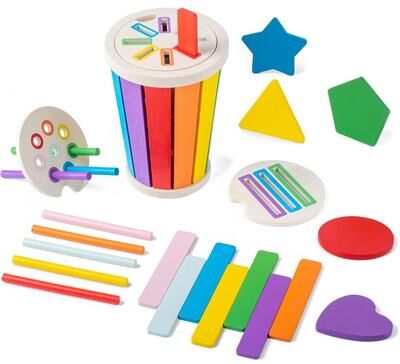
Playful Picks Montessori Hedgehog Color Sorting Educational Toddler Toy For Fine Motor Skills Development Montessori Hedgehog Color Sorting Educational Toddler Toy For Fine Motor Skills DevelopmentTurn early learning into a joyful daily adventure with a toy designed to spark curiosity and growth. The Montessori hedgehog toy is thoughtfully created for toddlers aged 13, helping them explore colors, counting, and coordination through handson...24,97 $*Shipping: 0,00 $Secure redirect to the provider
-
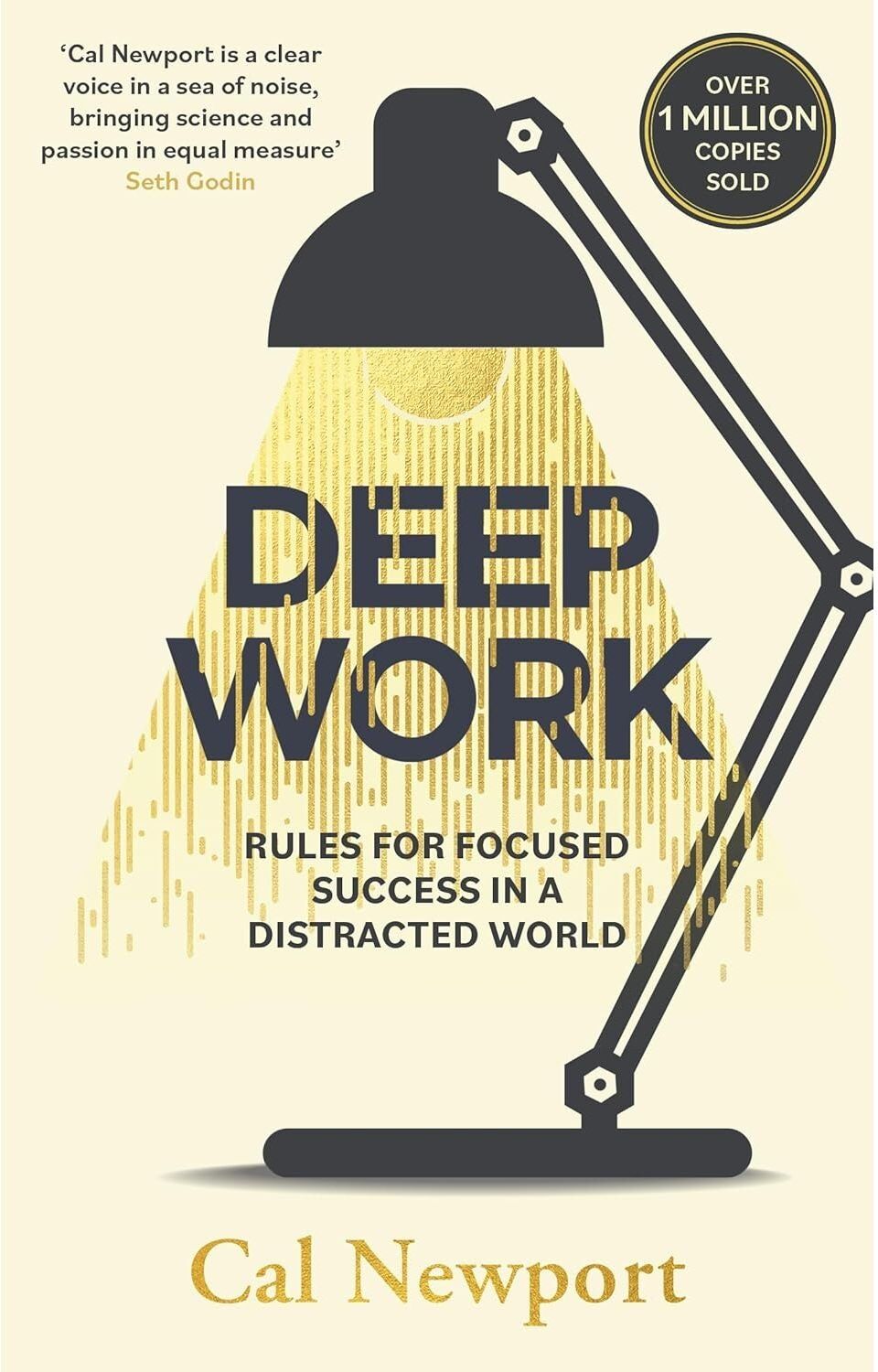
Piatkus Deep Work – Rules for Focused Success in a Distracted World by Cal Newport Productivity, Focus & Career Success BookIn a world full of distractions, the ability to focus deeply is becoming increasingly rare—and increasingly valuable. In Deep Work: Rules for Focused Success in a Distracted World, bestselling author and productivity expert Cal Newport explains why deep, concentrated work is the key to mastering complex skills, producing high-quality results, and standing out in your career. Drawing on neuroscience, psychology, and real-world examples, Newport shows how to eliminate distractions, train your focus, and work with intense concentration. The book combines compelling theory with practical strategies, helping readers build habits that support sustained attention and meaningful productivity in both professional and personal life. What You’ll Learn: Why deep work is essential for success in the modern economy How shallow work undermines productivity and focus Practical rules for building deep work habits Techniques to minimize distractions and digital overload How to produce better results in less time Perfect for professionals, students, creatives, and entrepreneurs, Deep Work is a must-read guide to achieving focus, efficiency, and long-term career success.7,99 £*Shipping: 2,99 £Secure redirect to the provider

-
What limits the cell nucleus?
The cell nucleus is limited by the nuclear envelope, which is a double membrane that surrounds the nucleus and separates it from the cytoplasm. This membrane has nuclear pores that control the movement of molecules in and out of the nucleus. Additionally, the size of the nucleus is limited by the amount of DNA it needs to contain and the need to maintain proper cellular function. Any disruption to the nuclear envelope or changes in nuclear size can impact the cell's ability to regulate gene expression and carry out essential functions. **
-
What is a atomic nucleus?
An atomic nucleus is the central part of an atom that contains protons and neutrons. It is positively charged due to the presence of protons, which are positively charged particles. The number of protons in the nucleus determines the element's identity, while the number of neutrons can vary, leading to different isotopes of the same element. The nucleus is held together by strong nuclear forces, which overcome the repulsive forces between positively charged protons. **
-
What is the cell nucleus?
The cell nucleus is a membrane-bound organelle found in eukaryotic cells. It contains the cell's genetic material, including DNA, and is responsible for controlling the cell's activities by regulating gene expression. The nucleus also plays a crucial role in cell division, as it is involved in the replication and distribution of genetic material to daughter cells. Additionally, the nucleus contains a dense region called the nucleolus, which is involved in the production of ribosomes. **
-
What is the electron-nucleus model?
The electron-nucleus model is a simplified representation of an atom that describes the arrangement of electrons around the nucleus. In this model, electrons are depicted as negatively charged particles orbiting around a positively charged nucleus. The nucleus contains protons and neutrons, which are tightly bound together at the center of the atom. This model helps us understand the basic structure of an atom and how electrons interact with the nucleus to form chemical bonds. **

Does a bacterium have a nucleus?
No, a bacterium does not have a nucleus. Bacteria are prokaryotic organisms, meaning they lack a membrane-bound nucleus. Instead, their genetic material is found in a single circular chromosome located in the nucleoid region of the cell. This genetic material is not enclosed within a nuclear membrane like in eukaryotic cells. **
Do prokaryotes have a cell nucleus?
No, prokaryotes do not have a cell nucleus. Prokaryotic cells lack a membrane-bound nucleus that houses their genetic material. Instead, their DNA is found in a region of the cell called the nucleoid. This is one of the key differences between prokaryotic and eukaryotic cells, as eukaryotic cells have a defined nucleus that separates their genetic material from the rest of the cell. **
Top-Angebote
Products related to Nucleus:
-
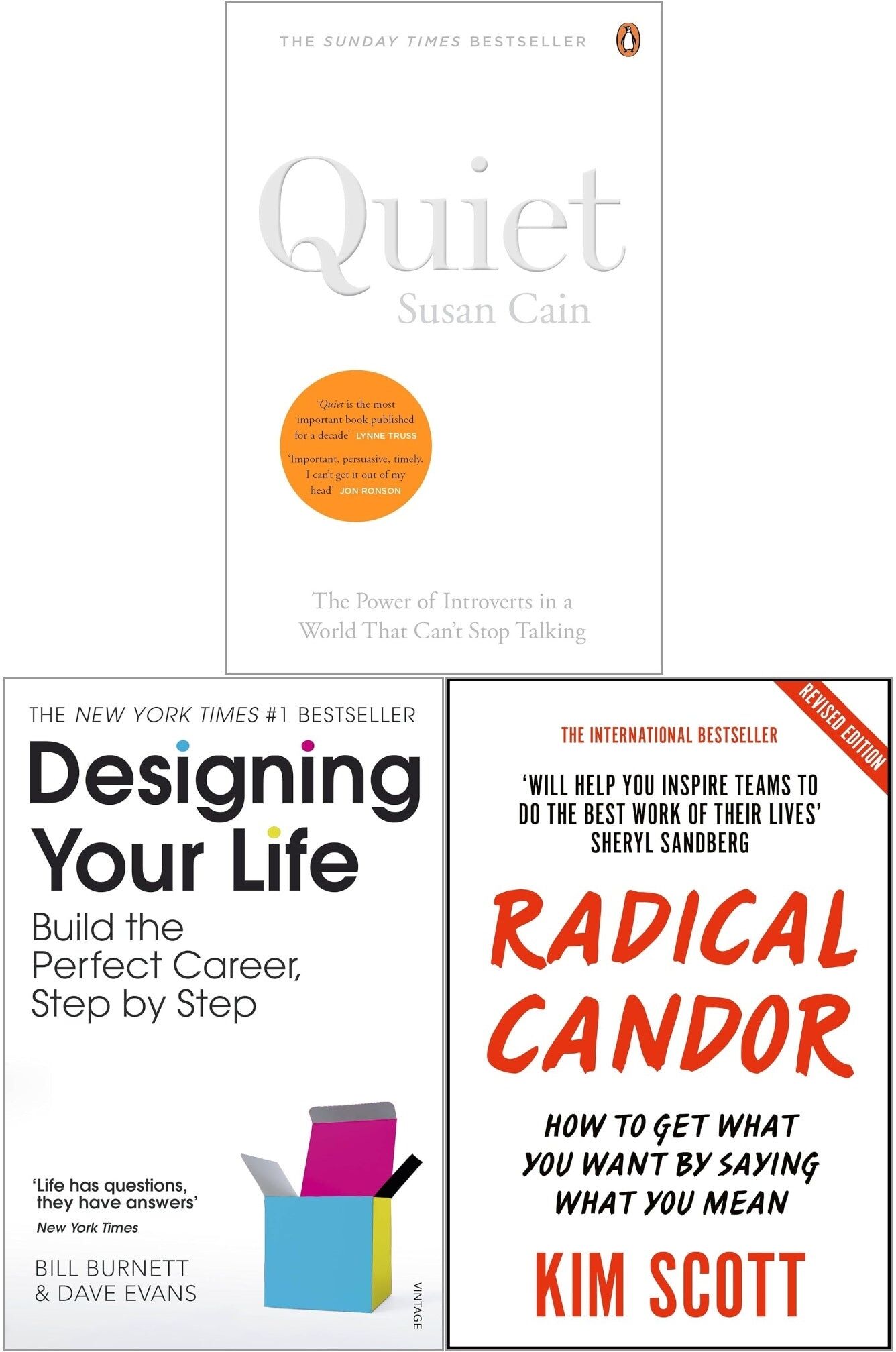
Penguin/Pan Macmillan Designing Your Life, Radical Candor and Quiet 3 Books Collection Set Personal Development, Leadership, Career Success & Self ImprovementDesigning Your Life, Radical Candor and Quiet 3 Books Collection Set Designing Your Life by Bill Burnett & Dave Evans Stanford innovators Bill Burnett and Dave Evans show us how design thinking can help us create a life that is both meaningful and fulfilling, regardless of who and where we are, our careers and our age. Designing Your Life puts forward the idea that the same design thinking responsible for amazing technology, products and spaces can be used to build towards a better life and career by a design of your own making. Radical Candor by Kim Scott Radical Candor by Kim Scott is a groundbreaking leadership and communication guide that teaches how to give feedback effectively, build trust, and create high-performing teams without becoming harsh—or avoiding difficult conversations. Based on Scott’s experience at Google, Apple and Silicon Valley startups, Radical Candor introduces a simple but powerful framework built on two pillars: Care Personally Challenge Directly The book provides practical tools for giving honest feedback, fostering open communication, strengthening working relationships, and becoming a more compassionate and impactful leader. Quiet by Susan Cain Quiet, the Sunday Times and New York Times Bestseller by Susan Cain, will permanently change how we see introverts - and how you see yourself. Our lives are driven by a fact most of us cant name and dont understand: whether were an introvert or an extrovert. This defines who our friends and lovers are, which careers we choose, and whether we blush when were embarrassed. At least a third of us are on the introverted side. Some of the worlds most talented people are introverts. Without them, we wouldnt have the Apple computer, the theory of relativity and Van Goghs sunflowers.16,99 £*Shipping: 2,99 £Secure redirect to the provider
-
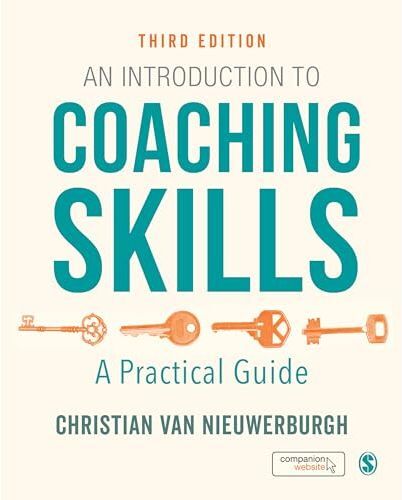
SAGE Publications An Introduction to Coaching Skills: A Practical GuideTo access the exclusive SAGE Videos, please see the code and instructions on the inside front cover of your textbook. If you have purchased the eBook from Amazon or another online retailer, please visit the book′s online resource site to contact SAGE, and we will assist further. This bestselling book introduces you step-by-step to the key skills needed to become a successful coach. Supported by an Online Resource site with over 70 videos of coaching in action, this practical book will be an invaluable resource for novices and trainee coaches.19,49 £*Shipping: 2,99 £Secure redirect to the provider
-
Thorsons Ultralearning: Accelerate Your Career, Master Hard Skills and Outsmart the CompetitionFuture-proof your career and maximize your competitive advantage by learning the skill necessary to stay relevant, reinvent yourself, and adapt to whatever the workplace throws your way in this essential guide. Faced with tumultuous economic times and rapid technological change, staying ahead in your career depends on continual learning―a lifelong mastery of new ideas, subjects, and skills. If you want to accomplish more and stand apart from everyone else, you need to become an ultralearner. Scott Young incorporates the latest research about the most effective learning methods and the stories of other ultralearners like himself―among them Ben Franklin, Judit Polgar, and Richard Feynman, as well as a host of others, such as little-known modern polymaths like Nigel Richards who won the World Championship of French Scrabble―without knowing French. Young documents the methods he and others have used and shows that, far from being an obscure skill limited to aggressive autodidacts, ultralearning is a powerful tool anyone can use to improve their career, studies, and life. Ultralearning explores this fascinating subculture, shares the nine principles behind every successful ultralearning project, and offers insights into how you can organize and execute a plan to learn anything deeply and quickly, without teachers or budget-busting tuition costs. Whether the goal is to be fluent in a language (or ten languages), earn the equivalent of a college degree in a fraction of the time, or master multiple skills to build a product or business from the ground up, the principles in Ultralearning will guide you to success.8,99 £*Shipping: 2,99 £Secure redirect to the provider
-
Tiny Tots Teens Trends Montessori Educational Toy, Hedgehog Fine Motor Skills, Toddler Counting, Sensory Development Montessori Educational Toy, Hedgehog Fine Motor Skills, Toddler Counting, Sensory DevelopmentHedgehog Montessori Educational Toy is a delightful and engaging learning tool designed to help toddlers develop essential fine motor skills, improve their concentration, and enhance sensory development. This toy promotes handson learning through...59,97 $*Shipping: 0,00 $Secure redirect to the provider
-
What is the nucleus?
The nucleus is a membrane-bound organelle found in eukaryotic cells that contains the cell's genetic material, including DNA. It acts as the control center of the cell, regulating gene expression and coordinating cellular activities. The nucleus is essential for cell division, growth, and reproduction. It is surrounded by a double membrane called the nuclear envelope, which contains pores that allow for the exchange of molecules between the nucleus and the cytoplasm. **
-
What is an atomic nucleus?
An atomic nucleus is the central part of an atom that contains protons and neutrons. It is positively charged due to the presence of protons and is surrounded by a cloud of negatively charged electrons. The nucleus is extremely dense and makes up the majority of the atom's mass. The number of protons in the nucleus determines the element's identity, while the number of neutrons can vary, resulting in different isotopes of the same element. **
-
What limits the cell nucleus?
The cell nucleus is limited by the nuclear envelope, which is a double membrane that surrounds the nucleus and separates it from the cytoplasm. This membrane has nuclear pores that control the movement of molecules in and out of the nucleus. Additionally, the size of the nucleus is limited by the amount of DNA it needs to contain and the need to maintain proper cellular function. Any disruption to the nuclear envelope or changes in nuclear size can impact the cell's ability to regulate gene expression and carry out essential functions. **
-
What is a atomic nucleus?
An atomic nucleus is the central part of an atom that contains protons and neutrons. It is positively charged due to the presence of protons, which are positively charged particles. The number of protons in the nucleus determines the element's identity, while the number of neutrons can vary, leading to different isotopes of the same element. The nucleus is held together by strong nuclear forces, which overcome the repulsive forces between positively charged protons. **
Similar search terms for Nucleus
-
Playful Picks Montessori Hedgehog Color Sorting Educational Toddler Toy For Fine Motor Skills Development Montessori Hedgehog Color Sorting Educational Toddler Toy For Fine Motor Skills DevelopmentTurn early learning into a joyful daily adventure with a toy designed to spark curiosity and growth. The Montessori hedgehog toy is thoughtfully created for toddlers aged 13, helping them explore colors, counting, and coordination through handson...24,97 $*Shipping: 0,00 $Secure redirect to the provider
-
Piatkus Deep Work – Rules for Focused Success in a Distracted World by Cal Newport Productivity, Focus & Career Success BookIn a world full of distractions, the ability to focus deeply is becoming increasingly rare—and increasingly valuable. In Deep Work: Rules for Focused Success in a Distracted World, bestselling author and productivity expert Cal Newport explains why deep, concentrated work is the key to mastering complex skills, producing high-quality results, and standing out in your career. Drawing on neuroscience, psychology, and real-world examples, Newport shows how to eliminate distractions, train your focus, and work with intense concentration. The book combines compelling theory with practical strategies, helping readers build habits that support sustained attention and meaningful productivity in both professional and personal life. What You’ll Learn: Why deep work is essential for success in the modern economy How shallow work undermines productivity and focus Practical rules for building deep work habits Techniques to minimize distractions and digital overload How to produce better results in less time Perfect for professionals, students, creatives, and entrepreneurs, Deep Work is a must-read guide to achieving focus, efficiency, and long-term career success.7,99 £*Shipping: 2,99 £Secure redirect to the provider
-
Zaffre ltd Tom Wilde Series 8 Books Collection Set By Rory Clements (Corpus, Nucleus, Nemesis, Hitler's Secret, A Prince and a Spy, The Man in the Bunker, The EnCorpus: 1936 - Europe is in turmoil. The Nazis have marched into the Rhineland. In Russia, Stalin has unleashed his Great Terror. Spain has erupted in civil war.In Berlin, a young Englishwoman evades the Gestapo to deliver vital papers to a Jewish scientist. Within weeks, she is found dead, a silver syringe clutched in her fingers. Nucleus: June 1939. England is partying like there's no tomorrow . . . but the good times won't last. The Nazis have invaded Czechoslovakia, in Germany Jewish persecution is widespread and, closer to home, the IRA has embarked on a bombing campaign. Nemesis: In a great English house, a young woman offers herself to one of the most powerful and influential figures in the land - but this is no ordinary seduction. She plans to ensure his death . . . Hitler's Secret: In Cambridge, professor Tom Wilde is approached by an American intelligence officer who claims to know of such a weapon - one so secret even Hitler himself isn't aware of its existence. If Wilde can smuggle the package out of Germany, the Third Reich will surely fall. A Prince and a Spy: Sweden, 1942 - Two old friends meet. They are cousins. One is Prince George, Duke of Kent, brother of the King of England. The other is Prince Philipp von Hesse, a committed Nazi and close friend of Adolf Hitler. Days later, the Prince George is killed in a plane crash in the north of Scotland. The official story is that it was an accident - but not everyone is convinced. The Man in the Bunker: Germany, late summer 1945 - The war is over but the country is in ruins. Millions of refugees and holocaust survivors strive to rebuild their lives in displaced persons camps. Millions of German soldiers and SS men are held captive in primitive conditions in open-air detention centres. Everywhere, civilians are desperate for food and shelter. No one admits to having voted Nazi, yet many are unrepentant. Adolf Hitler is said to have killed himself in his Berlin bunker. But no body was found - and many people believe he is alive. The English Fuhrer: Autumn 1945 - Off the east coast of England, a Japanese sub surfaces, unloads its mysterious cargo, then blows itself to pieces. Former spy Professor Tom Wilde is enjoying peacetime in Cambridge, settling back into teaching and family life. Until a call from senior MI5 boss Lord Templeman brings him out of retirement. A nearby village has been locked down by the military, its residents blighted by a deadly illness. No one is allowed in or out. A Cold Wind from Moscow: Winter, 1947. Britain's secret services have been penetrated. The country is more vulnerable than ever - and Soviet leader Joseph Stalin knows it. He decides it is time to send his master of 'Special Tasks' to create extra chaos. But Stalin has a more important motive than mere disruption. He has a man on the inside who must be protected at all costs - a communist super-spy who has the secrets of the atomic bomb at his fingertips. Freya Bentall, a senior MI5 officer, no longer...24,99 £*Shipping: 2,99 £Secure redirect to the provider
-
Youfap Market Montessori Wooden Shape Sorting Toy For Toddlers, Color Matching & Fine Motor Skills Development aGive your toddler a head start in learning with this Montessori wooden shape sorting toy. Designed for young learners, it helps build fine motor skills through colorful and interactive matching games. Perfect for kids ages 3 and up, this educational...64,97 $*Shipping: 0,00 $Secure redirect to the provider
-
What is the cell nucleus?
The cell nucleus is a membrane-bound organelle found in eukaryotic cells. It contains the cell's genetic material, including DNA, and is responsible for controlling the cell's activities by regulating gene expression. The nucleus also plays a crucial role in cell division, as it is involved in the replication and distribution of genetic material to daughter cells. Additionally, the nucleus contains a dense region called the nucleolus, which is involved in the production of ribosomes. **
-
What is the electron-nucleus model?
The electron-nucleus model is a simplified representation of an atom that describes the arrangement of electrons around the nucleus. In this model, electrons are depicted as negatively charged particles orbiting around a positively charged nucleus. The nucleus contains protons and neutrons, which are tightly bound together at the center of the atom. This model helps us understand the basic structure of an atom and how electrons interact with the nucleus to form chemical bonds. **
-
Does a bacterium have a nucleus?
No, a bacterium does not have a nucleus. Bacteria are prokaryotic organisms, meaning they lack a membrane-bound nucleus. Instead, their genetic material is found in a single circular chromosome located in the nucleoid region of the cell. This genetic material is not enclosed within a nuclear membrane like in eukaryotic cells. **
-
Do prokaryotes have a cell nucleus?
No, prokaryotes do not have a cell nucleus. Prokaryotic cells lack a membrane-bound nucleus that houses their genetic material. Instead, their DNA is found in a region of the cell called the nucleoid. This is one of the key differences between prokaryotic and eukaryotic cells, as eukaryotic cells have a defined nucleus that separates their genetic material from the rest of the cell. **
* All prices are inclusive of VAT and, if applicable, plus shipping costs. The offer information is based on the details provided by the respective shop and is updated through automated processes. Real-time updates do not occur, so deviations can occur in individual cases. ** Note: Parts of this content were created by AI.